By Sara Salimi
With the hotter conditions in early July across the Pacific Northwest we’ve received a lot of questions about trends in heat waves. Past research from OWSC has shown that daytime heat waves — which we defined as 3 consecutive days above the 99th percentile — do not yet show a statistically significant trend across western Washington and western Oregon. In contrast, there has been a significant increase in overnight heat events (Bumbaco et al. 2013). As warming accelerates due to climate change, we expect these trends to become more clear, with more frequent and intense heat waves in the future. We’re currently updating our 2013 study and will share our results here when they are finalized. In the meantime, the focus of this piece is to review heat-related illness prevention strategies and showcase King County’s new Extreme Heat Mitigation Strategy.
Heat-Related Illness (HRI) and Prevention
Rising temperatures and the possibility of more frequent heat waves are a growing concern for the livelihood of Washingtonians, as recent extreme heat in the Pacific Northwest has brought up major concerns regarding human health and safety, and nature preservation. Ecosystems are also harmed by excessive heat, but in this month’s newsletter we are focusing on the human impacts. Exposure to extreme heat can stress multiple organ systems and put individuals at risk of heat-related illness (HRI) and mortality (Hess et al. 2023, Vogel et al. 2023). This means it is important to quickly identify what is causing the HRI symptoms so that appropriate action can be taken to regulate health (Figure 1). Some of the notable heat-related illnesses include acute heat illnesses (e.g., heat exhaustion, heat stroke), chronic disease exacerbations (e.g., flares of cardiovascular, kidney, respiratory, and psychiatric disorders), injuries (e.g., occupational injuries, drowning), and adverse pregnancy outcomes (e.g., premature delivery, low-birth weight; Hess et al. 2023, Vogel et al. 2023). People who are at greater risk of HRI are the elderly, children, pregnant people, people who have chronic medical conditions, and the unhoused population (Vogel et al. 2023). People in urban areas can be more vulnerable to adverse health outcomes due to the urban heat island effect, where urban areas can get hotter because there is more concrete, asphalt, and fewer trees in neighborhoods.
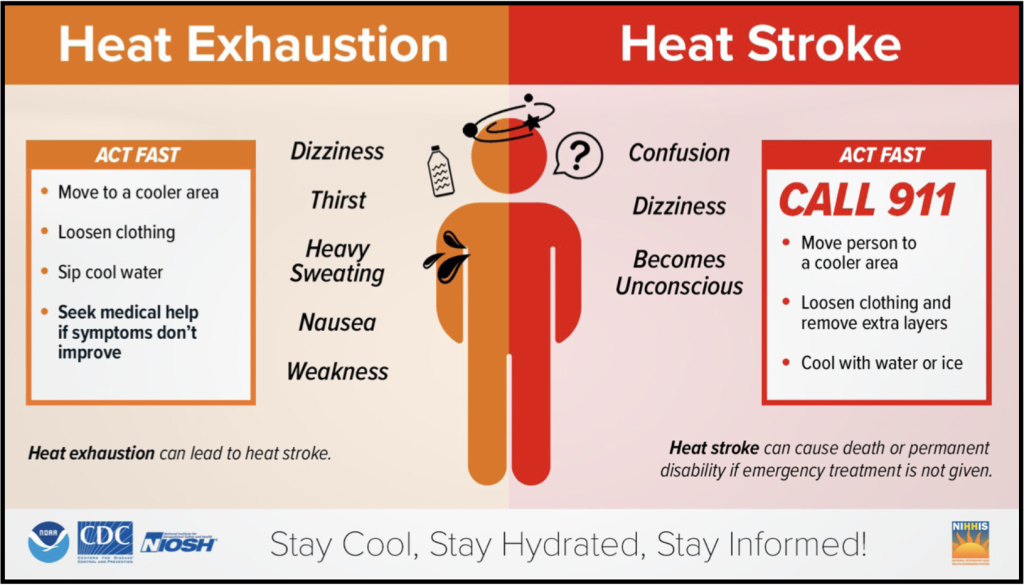 Figure 1: Take appropriate action in the case of heat exhaustion (left side) and heat stroke (right side). Some other ways you can create a cool environment is by placing a cool damp towel on the neck of the individual. If the person is able a cool shower can be just as effective. (Vogel et al. 2023)
Outside workers such as those in agriculture, construction, firefighting, and manufacturing are at high risk of heat-related illness and even death. It is crucial to track HRI in the workplace (both for indoor and outdoor workers) and to introduce prevention and mitigation strategies that make sense for maintaining a healthy and safe environment. After the extreme heat wave experienced in the Pacific Northwest in June 2021, the Washington State Department of Labor & Industries (L&I) revised the 2008 outdoor heat exposure rule, which went into effect on July 17th, 2023 (Ahmad et al. 2023).
In the new version the outdoor heat exposure rules are applied year-round and outdoor temperature levels depend on the type of clothing (breathable or not) used at work. Also, the outdoor temperature action level has been reduced from 89 °F to 80 °F (Ahmad et al. 2023; Table 1). Some additional information was included in the definitions for the outdoor heat exposure rules including acclimatization, establishing a buddy system, risk factors from HRI, and shade (Ahmad et al. 2023). The new rules put greater responsibility on both the employer and the employee to ensure safe working conditions during extreme heat situations. The employer must include a written outdoor heat exposure safety program that incorporates the following: shade or other means to reduce body temperature, procedures for providing cool drinking water, acclimatization methods (e.g. close observations of employees not acclimatized yet, and buddy systems), emergency response procedures for employees demonstrating HRI signs and symptoms (information and training), a high heat procedure (e.g. cool-down rest periods), and methods of observing signs and symptoms for HRI by the employer (Table 2; Ahmad et al. 2023).
The Washington State Department of Labor & Industries has recognized the extreme heat impacts by taking action to set new rules that potentially change the functionality of the workplace to benefit workers. There are many options that supervisors can consider to keep their employees comfortable and cool while also reducing their heat exposure such as providing air conditioning and scheduling work during the cooler hours of the day.
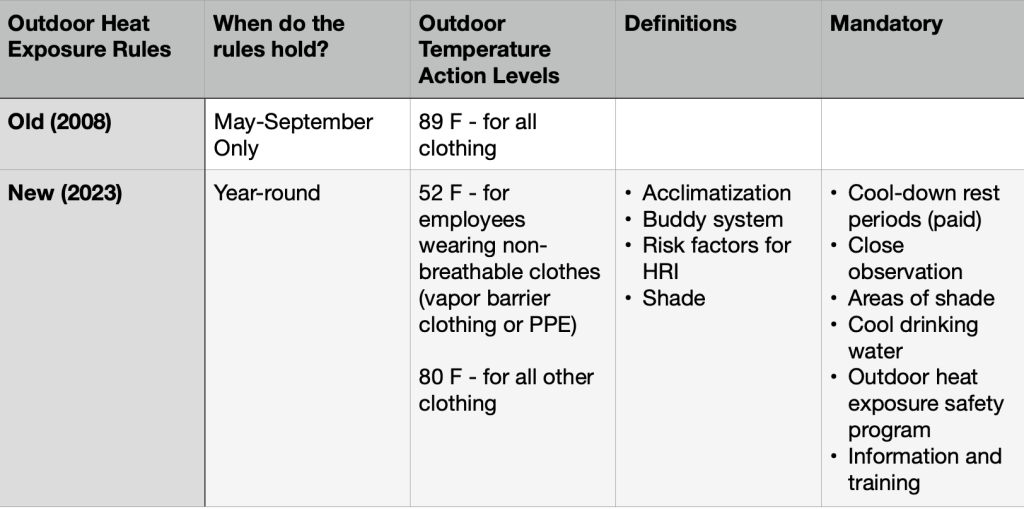 Table 1: Heat Exposure Rules Comparison Old (2008) vs New (2023) (Ahmad et al. 2023).
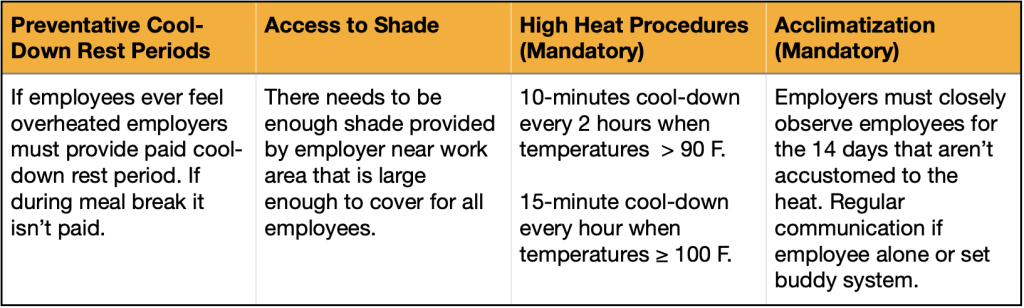 Table 2: Employer Rules For Extreme Heat Exposure (Ahmad et al. 2023).
Adaptation: New Extreme Heat Plan (King County)
A King County study exposed inequalities that some communities are being disproportionally affected by heat, with different parts of the county experiencing as much as a 20°F difference in temperature at the same time (Iyaz et al. 2023). This poses a concern as people living in heat islands are disproportionately low-income, people of color, seniors living alone, and people with limited English proficiency (Iyaz et al. 2023). The heat mapping project that King County and the City of Seattle part took in has allowed us to see these disproportionate impacts of heat in King County. Volunteers helped gather the temperature measurement data for this heat mapping project during a one-day extreme heat event that occurred on July 27, 2020 (Iyaz et al. 2023). The measurements were collected over multiple times of the day (6-7 am, 3-4 pm, and 7-8 pm) (Iyaz et al. 2023). Figure 2 shows the surface-level temperatures that were recorded during the evening in the region, which clearly shows higher temperatures for urban areas with less tree canopy when compared to areas that aren’t as urbanized. This information is helpful for informing near-term and long-term actions.
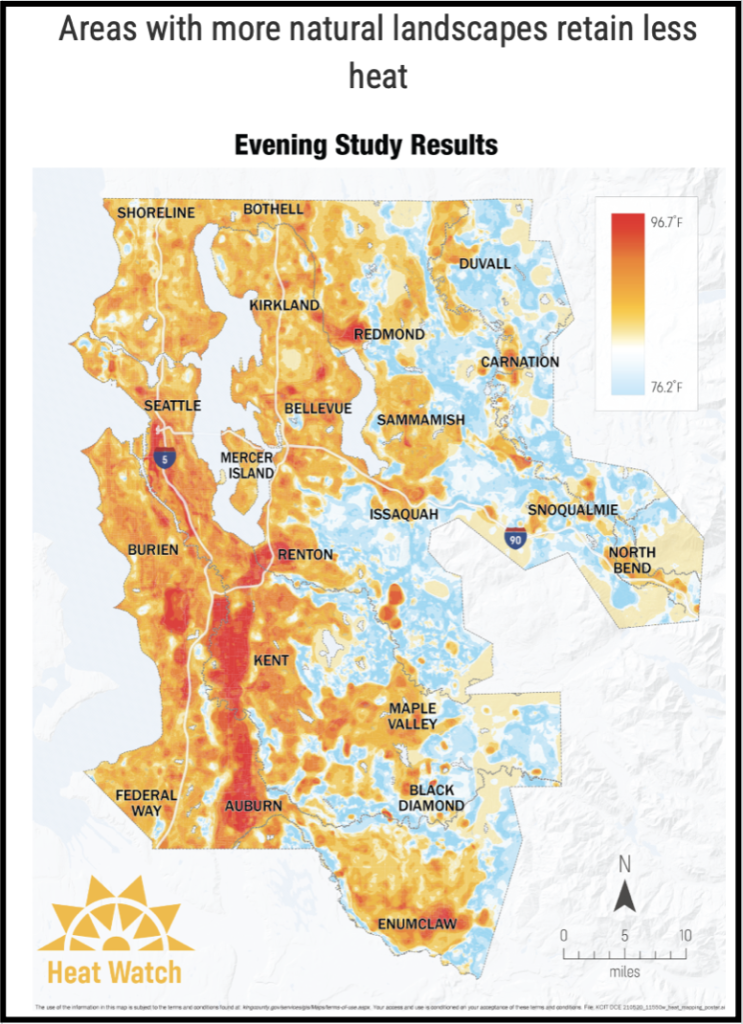 Figure 2: Surface-level temperatures in the Evening of July 27, 2020 (Iyaz et al. 2023).
King County recently released its Extreme Heat Mitigation Strategy which aims to take a comprehensive approach to preparing the community in King County for the impacts of climate change (Iyaz et al. 2023). The King County Extreme Heat Mitigation Strategy is a 5-year plan (2024-2029), and there are 20 actions that either help with near-term heat coping activities (e.g. cold towels on windows, cold showers, seeking air-conditioned spaces, or fans) or longer-term heat preparedness intervention (e.g. multilingual communication of heat preparedness and mitigation content, heat resilience training, and increasing tree canopy areas) (Iyaz et al. 2023). The 20 actions are organized into 6 overarching categories that summarize the strategy. For more information visit The King County Extreme Heat Mitigation Strategy (Table 3).
 Table 3: The 6 categories of the King County Extreme Heat Mitigation Strategy (left column) and the actions for each (right column) (Iyaz et al. 2023).
References
Ahmad, H. R., and Joyce, P. D. 2023. Employers Feeling the Heat: Washington Adopts Permanent Changes to Outdoor Heat Exposure Rules Effective July 12, 2023. Seyfarth. https://www.seyfarth.com/news-insights/employers-feeling-the-heat-washington-adopts-permanent-changes-to-outdoor-heat-exposure-rules-effective-july-17-2023.html
Bumbaco, K. A., K. D. Dello, and N. A. Bond. 2013. History of Pacific Northwest Heat Waves: Synoptic Pattern and Trends. J. Appl. Meteor. Climatol., 52, 1618–1631, https://doi.org/10.1175/JAMC-D-12-094.1.
Hess, J. J., Errett, N. A., McGregor, G., Isaksen, T. B., Wettstein, Z. S., Wheat, S. K., & Ebi, K. L. 2023. Public health preparedness for extreme heat events. Annual Review of Public Health, 44, 301-321. https://doi.org/10.1146/annurev-publhealth-071421-025508
Iyaz D. et al. 2023. Extreme Heat Mitigation Strategy King County. King County. https://kingcounty.gov/dept/executive/governance-leadership/climate-office/focus-areas/preparing-for-climate-change/extreme-heat-mitigation
Vogel, J., J. Hess, Z. Kearl, K. Naismith, K. Bumbaco, B.G. Henning, R. Cunningham, N. Bond. 2023. In the Hot Seat: Saving Lives from Extreme Heat in Washington State. Report prepared by the University of Washington’s Climate Impacts Group, UW’s Center for Health and the Global Environment, the Washington State Department of Health, the Office of the Washington State Climatologist, and Gonzaga University’s Center for Climate, Society & the Environment. https://cig.uw.edu/projects/in-the-hot-seat-saving-lives-from-extreme-heat-in-washington-state/