By Jacob Genuise
Key Messages:
- Streamflows in mountain basins continue to run below to extremely below normal. Some stations in the Olympics and western Cascades have seen temporary boosts in streamflow thanks to beneficial rainfall in early September.
- Reservoir storages will likely remain below normal as we head into the new water year.
- D3, “Extreme Drought” expanded to include much of Spokane County in August due to drier than normal conditions in July and August.
- Water supply forecasts improved slightly this month, but junior water rights holders in the Yakima Basin will still not receive their full allotment. Many irrigation districts plan to be able to supply water longer than last year, but the next few weeks’ conditions will determine when irrigation deliveries will end.
Streamflows continue to run below normal in nearly all mountain-fed rivers in the Cascades. A map of station streamflows shows most stations are below, much below, or extremely below normal. The stations experiencing low streamflows are colored brown on the accompanying figure. Streams that are experiencing record low streamflows on September 3rd are also marked with red exclamation marks. These include many stations along the Skagit, Nooksack, Puyallup, and Wenatchee rivers. Recent beneficial rain in early September has temporarily boosted streamflows across the Olympic Peninsula and in western Washington as a whole, but without continued rain rivers are likely to return to below normal streamflows.
 USGS streamflows map as of September 3, 2026.
In the Yakima Basin, total basin reservoir storage continues to run below normal, although storage is not as low as it was at this point last year. The latest U.S. Bureau of Reclamation water supply forecast, released on September 3, indicates that Junior water rights holders are expected to receive 60% of their entitlements. This is a slight increase from the previous monthly forecast, and is an 11% increase since the first forecast back in mid-April. This improvement in water delivery estimates for the remainder of the irrigation season is good news for irrigators in Yakima basin. Conditions over the next few weeks will determine how long water deliveries will continue at irrigation districts this year. We are also likely to go into the next water year with below normal reservoirs.
 Yakima River Basin total reservoir storage through September 2, 2026. Data from the U.S. Bureau of Recreation. The solid blue line shows current year storage. The dashed green line shows last year’s storage. The dotted red line shows average reservoir storage.
The U.S. Drought Monitor shows some expansion of drought conditions into the northwestern Cascades due to dry conditions over the past month. Most of Spokane County was also upgraded to D3 “Extreme Drought” conditions after almost no precipitation fell this past month or the previous month.
 U.S. Drought Monitor for Washington. Data valid on September 1, 2026.
Looking back at the full summer period, this map of U.S. Drought Monitor class changes show where drought conditions have changed the most since June 9. Most areas saw worsening drought conditions due to warmer and drier than normal conditions including the northern Olympic Peninsula, the Cascades, and far eastern Washington. Drought intensified most in the northern Cascades and in parts of Spokane County. Portions of Ferry County received beneficial summer thunderstorms that helped slightly improve drought conditions there this summer.
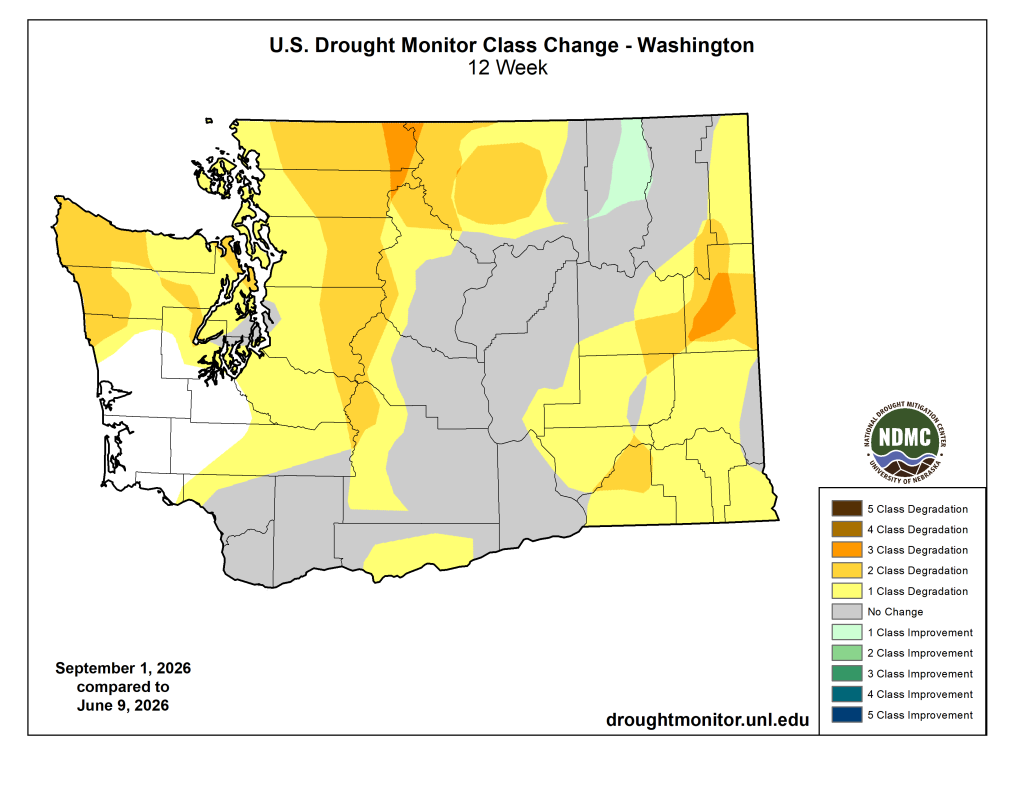 U.S. Drought Monitor class change from June 30 to August 4, 2026.