By Jacob Genuise
Key Messages
- La Niña conditions remain in place, with a 75% chance of neutral conditions by January-March. El Niño conditions are becoming more likely in the extended outlook, with nearly equal chances of neutral or El Niño conditions for the June-August period and minimal chances of La Niña persisting.
- Predictability is generally low for both precipitation and temperature over the next few months.
A La Niña advisory remains in place with a transition back to neutral conditions very likely in January-March (75% chance). This year’s La Niña event continues to be relatively weak, in line with forecast guidance from earlier in the season. An early look at ENSO conditions for summer 2026 indicate nearly equal chances of either a switch to El Niño or neutral conditions by the June-August period. Although historically ENSO does not have a large influence on summer conditions in the Pacific Northwest, this is an early indication that La Niña is becoming a less likely outcome for winter 2026. It should be noted that we are still a long way off from knowing whether El Niño will set in by late 2026.
The 1-Month outlook for January shows generally low confidence in precipitation and temperatures for the month of December. There are, however, slightly elevated chances (33-40%) of above normal temperatures across the state.
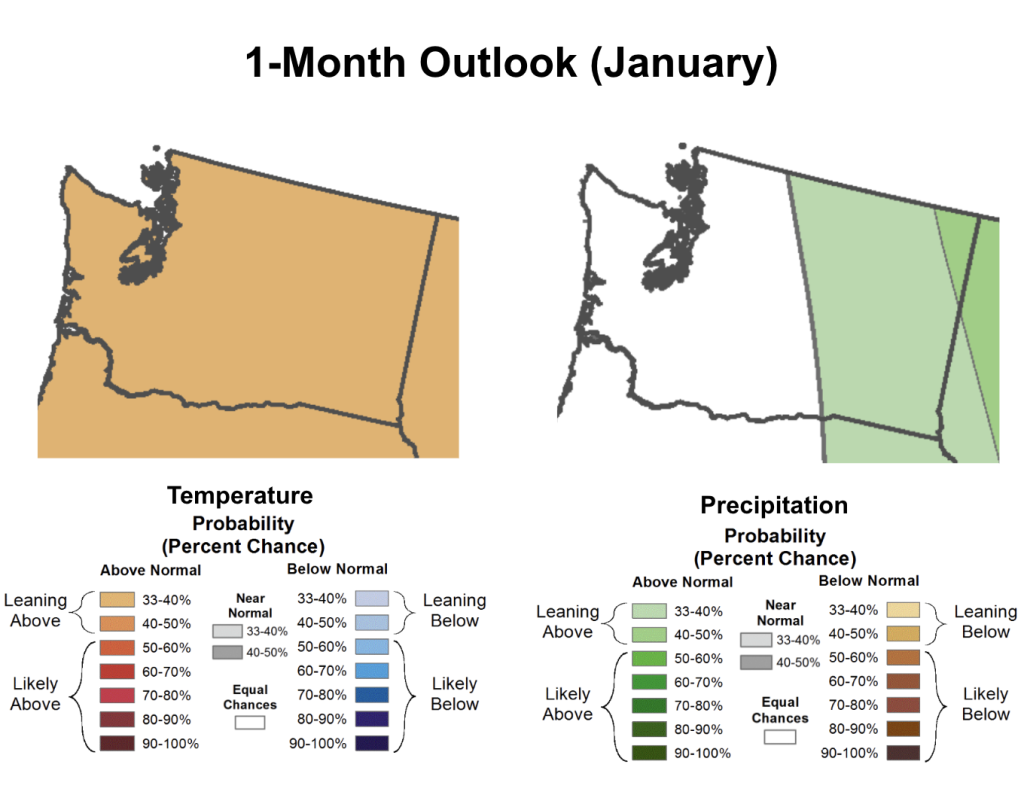 1-month (January) outlook for temperature (left) and precipitation (right) in Washington State.
Across far eastern Washington, there is a slightly higher chance (33-40%) of wetter than normal conditions east of a line drawn from the Okanogan Valley to Walla Walla. Slightly higher chances of wetter than normal conditions (40-50%) exist for the far northeast corner of the state.
It is worth noting that this 1-Month outlook was created on Dec. 31. More recent guidance suggests a pattern change toward a drier than normal pattern for a decent portion of January.
The 3-Month outlook for January through March shows slightly elevated chances (33-40%) of both cooler than normal and wetter than normal temperatures statewide. These are largely based on late-winter conditions during past weak La Niña seasons, of which there are only a handful of seasons available to provide guidance. Given this small sample size and the weak nature of our current La Nina, late winter conditions will likely come down to specific weather patterns.
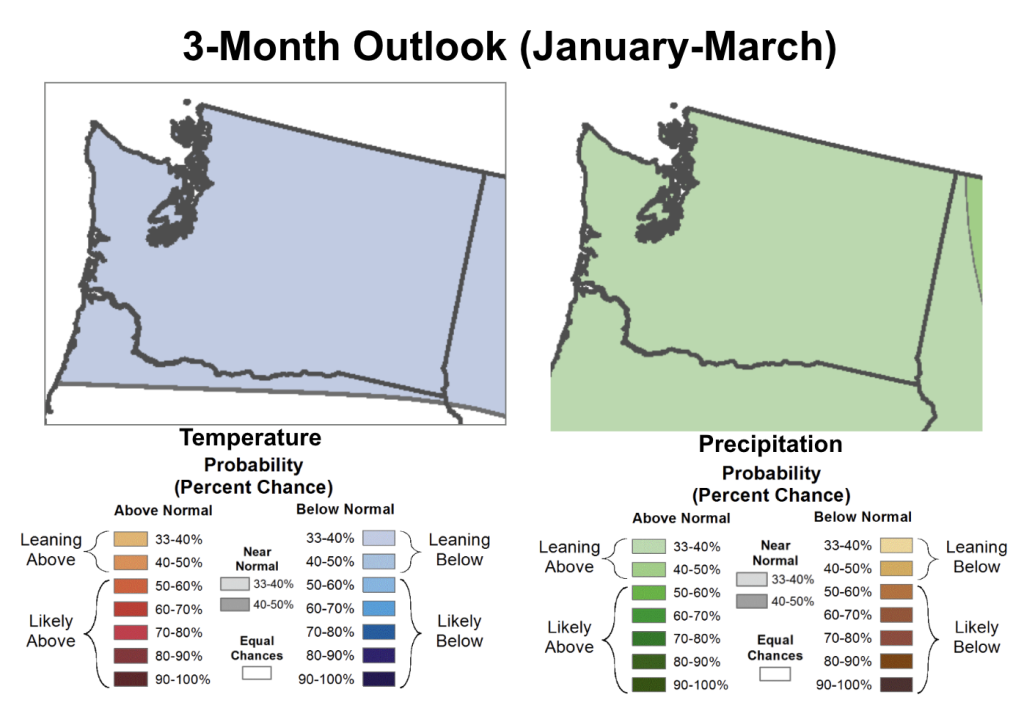 3-month (January, February, March) outlook for temperature (left) and precipitation (right) in Washington State.